Facades · 6 min read
Glass Facades and Curtain Walls: Design, Performance, and Selection
Glass facades dominate the modern commercial skyline. This article breaks down the performance parameters, facade types, and specification considerations every project team needs.
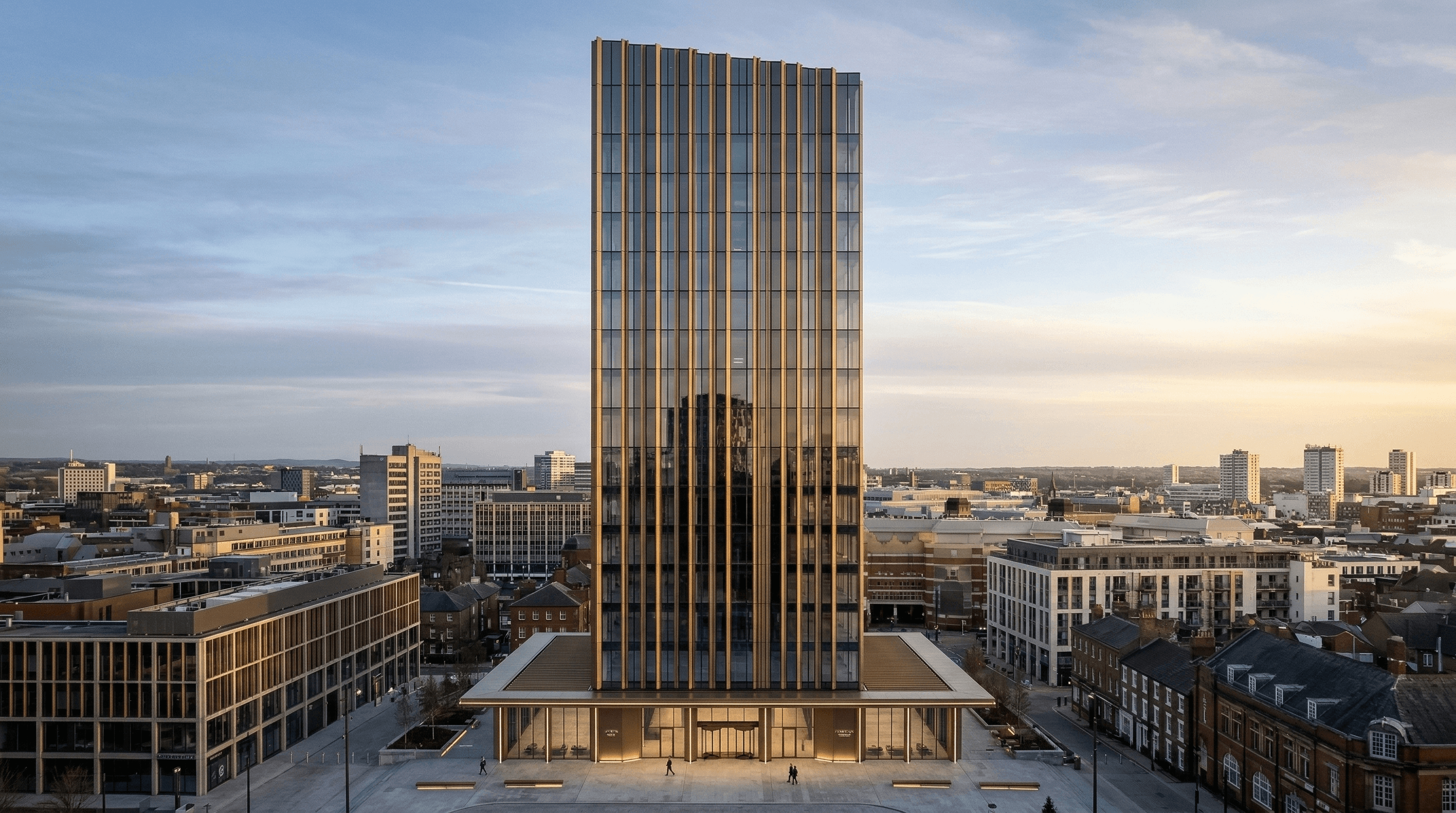
The glass facade has become the defining visual signature of contemporary commercial architecture. From curtain wall towers in Hyderabad's HITEC City to the glazed retail plinths of Mumbai's BKC, architects and developers are specifying more glass than ever. But choosing the right facade system involves far more than aesthetics.
Facade System Types
Stick Curtain Wall — aluminium mullions and transoms are assembled on site. Cost-effective for standard commercial projects, with good flexibility for irregular geometries.
Unitised Curtain Wall — factory-fabricated panels arrive on site ready to install. Superior quality control and dramatically faster installation — essential for high-rise buildings where scaffolding time is expensive.
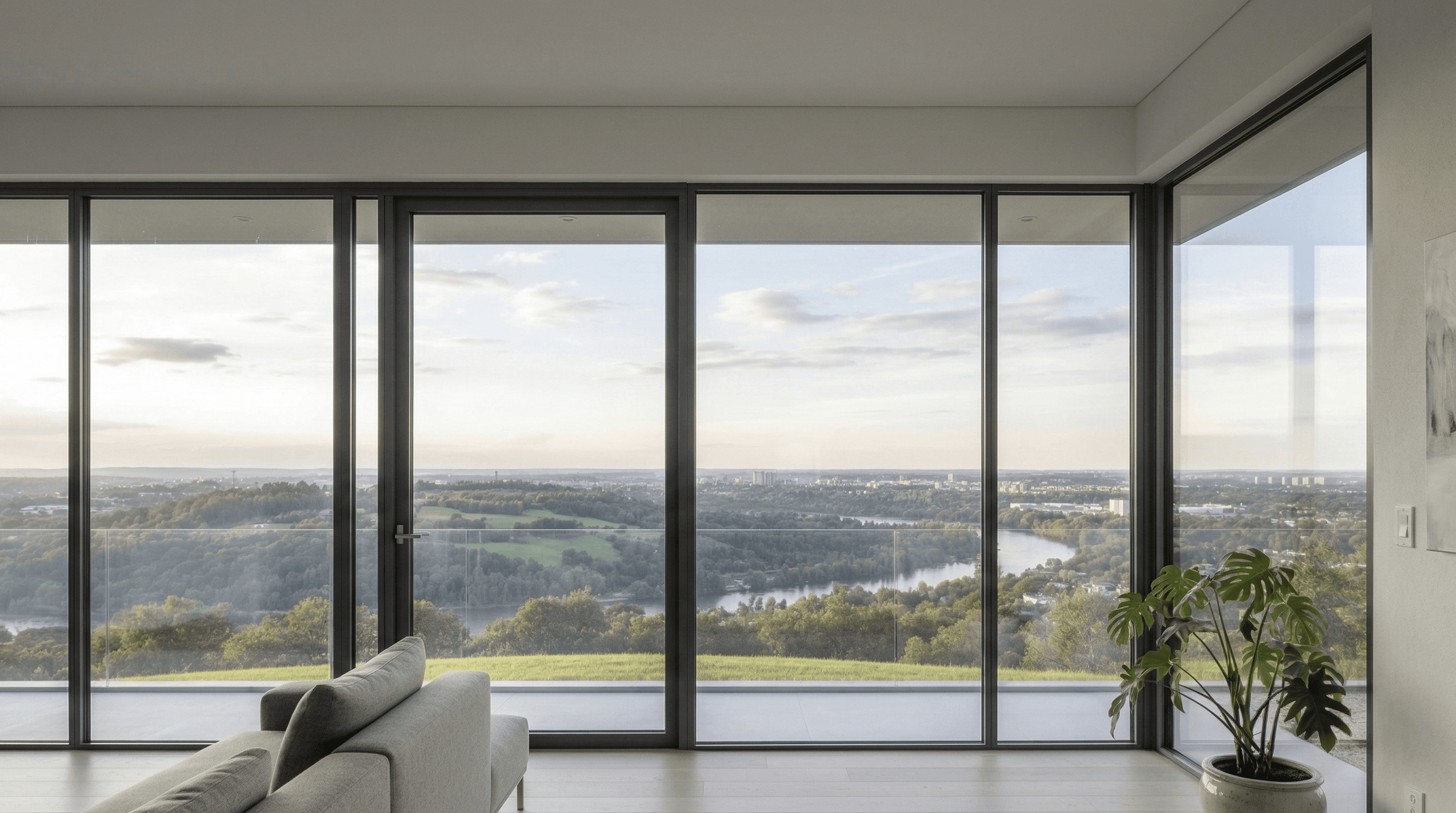
Structural Glazing (SGU/SSG) — glass is bonded directly to the aluminium frame using structural silicone, eliminating visible framework for a flush all-glass appearance. Ideal for premium commercial facades where uninterrupted views and maximum light transmission are priorities.
Double Skin Facade — an outer glass screen separated from an inner insulated layer by a ventilated cavity. The most thermally efficient facade type, reducing solar heat gain by up to 60% compared to a single-skin system.
Glazing Specification
The glazing unit specification drives thermal performance, acoustic performance, and solar control simultaneously.
- **Solar factor (g-value)** — the proportion of solar radiation transmitted through the glass. Target below 0.35 for south and west facades in India to limit air conditioning loads.
- **Light transmittance (LT)** — higher is better for visual comfort, but must be balanced against solar heat gain. Selective coatings allow high LT with low g-value.
- **U-value** — the measure of thermal resistance. For Indian climates, DGU with low-e coating (U ≈ 1.4–1.6 W/m²K) is typically sufficient.
ACP and Metal Facades
Where solid cladding is preferred — for privacy, acoustics, or cost — aluminium composite panel (ACP) and metal facade systems provide a clean, modern alternative. ACP consists of two thin aluminium skins bonded to a polyethylene or fire-resistant mineral core, offering excellent flatness and a wide choice of finishes including brushed metal, stone effect, and solid RAL colours.
Perforated metal facades add a further dimension — depth and shadow play that changes character as the light shifts through the day, while providing controlled solar shading to the glazing behind.
Selection Framework
| Priority | System |
|---|---|
| Maximum glazing | Structural glazing |
| Thermal performance | Double skin facade |
| Fastest installation | Unitised curtain wall |
| Cost efficiency | Stick curtain wall |
| Mixed solid/glazed | ACP + structural glazing |
Metanoia Global Solutions provides complete facade design, supply, and installation services across residential, commercial, and industrial sectors.