Windows · 5 min read
Casement Windows: The Complete Guide for Modern Buildings
Casement windows offer superior ventilation, energy efficiency, and sleek aesthetics. This guide covers everything architects and builders need to know before specifying them.
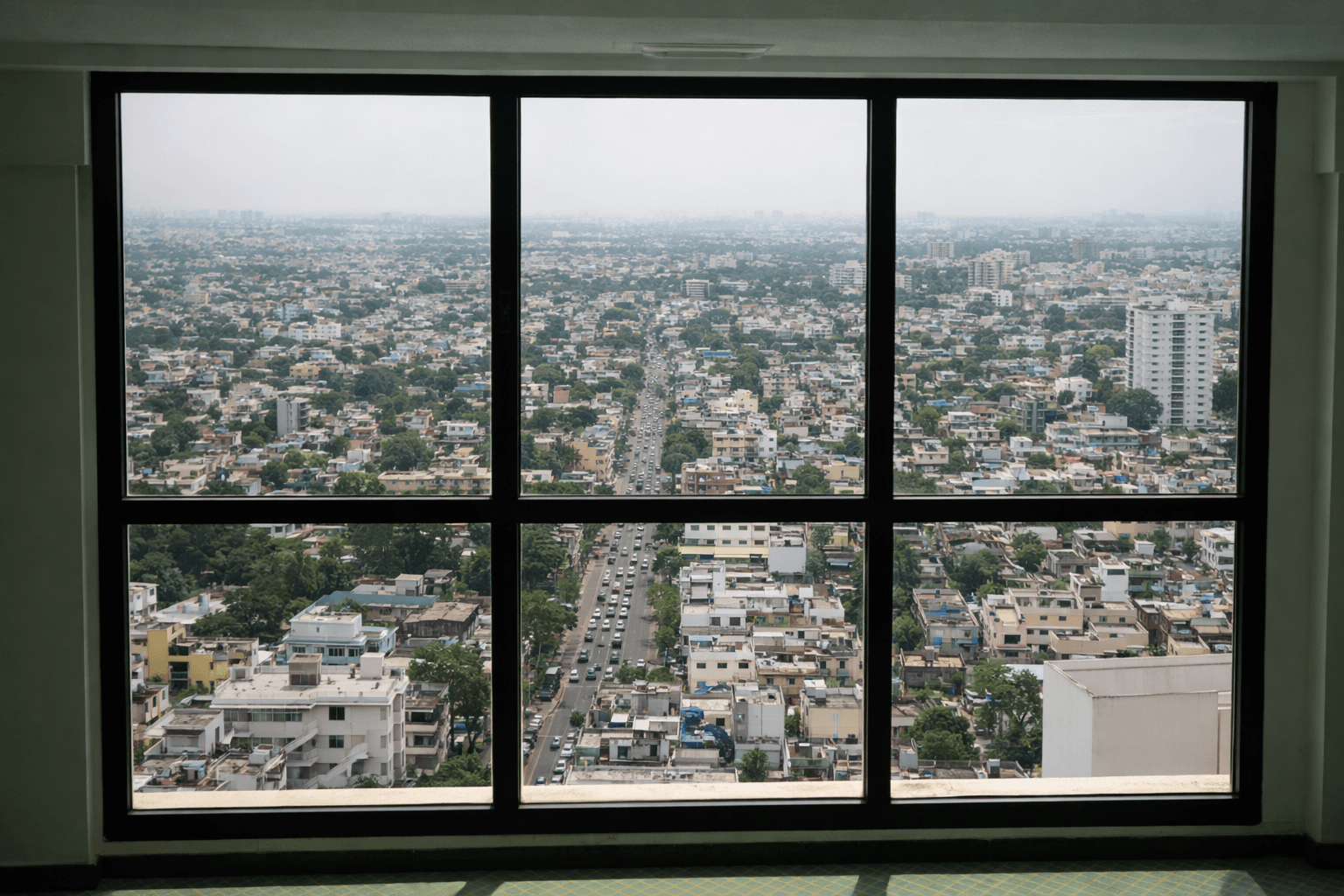
Casement windows have become the preferred choice for modern commercial and residential builds across India — and for good reason. Unlike sliding or fixed alternatives, casement sashes swing fully open, delivering maximum airflow and unobstructed views.
Why Casement Windows?
The core advantage is ventilation. A fully open casement sash channels the entire airflow through the opening, making it far more effective than a sliding window that can only expose half the frame at best. For naturally ventilated buildings in India's varied climate zones — from coastal Mumbai to arid Rajasthan — this matters.
Inward vs Outward Opening
Inward Opening Windows allow the sash to swing inside the room, making them ideal for high-rise facades where external access is unsafe. The friction-stay hardware gives occupants full control over the opening angle.
Outward Opening Windows push the sash out of the building, preserving interior space and making them the standard choice for residential applications. Multipoint espagnolette locks provide excellent weather sealing when closed.
Tilt and Turn: The Best of Both Worlds
Tilt-and-turn windows add a third mode to the classic casement. At the first handle position the sash tilts inward from the top for secure background ventilation — ideal for leaving windows open during light rain. At the second handle position, the entire sash swings fully inward for maximum airflow and safe interior cleaning.
Frame Material: Aluminium vs UPVC
Aluminium frames offer slimmer sightlines, greater structural rigidity, and a modern architectural aesthetic. Thermally broken aluminium profiles with polyamide breaks provide U-values down to 1.1 W/m²K.
UPVC frames excel in thermal insulation and are naturally corrosion-resistant — ideal for coastal locations where salt air is a concern. UPVC systems with multi-chamber profiles can achieve U-values below 1.0 W/m²K with triple glazing.
Glazing Options
- **Single glazing** — for mild climates with no acoustic requirements
- **DGU (Double Glazed Unit)** — 5+9+5 or 4+12+4 configurations for thermal and acoustic comfort
- **Triple glazing** — for premium energy performance
Specification Checklist
When specifying casement windows, ensure the following are addressed:
1. Opening direction — inward or outward
2. Frame material and finish
3. Glazing specification and U-value target
4. Hardware grade — friction stay, espagnolette, or tilt-turn multipoint
5. Weather rating — Class A3 / W2 / E750 minimum for exposed facades
6. Maximum sash dimensions — typically 900 × 1800 mm for outward opening
Metanoia Global Solutions supplies and installs casement window systems across India, with full project specification support from our technical team.